SUBSCRIBE TO OUR FREE NEWSLETTER
Daily news & progressive opinion—funded by the people, not the corporations—delivered straight to your inbox.
5
#000000
#FFFFFF
To donate by check, phone, or other method, see our More Ways to Give page.
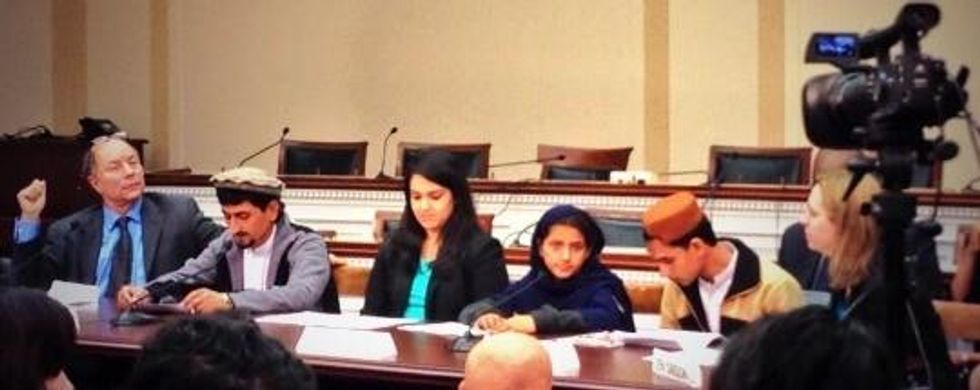
Despite being heralded as the first time in history that U.S. lawmakers would hear directly from the survivors of a U.S. drone strike, only five elected officials chose to attend the congressional briefing that took place Tuesday.
Pakistani schoolteacher Rafiq ur Rehman and his two children--9 year-old daughter Nabila and 13 year-old son Zubair--came to Washington, DC to give their account of a U.S. drone attack that killed Rafiq's mother, Momina Bibi, and injured the two children in the remote tribal region of North Waziristan last October.
According to journalist Anjali Kamat, who was present and tweeting live during the hearing, the only lawmakers to attend the briefing organized by Rep. Alan Grayson (D-Fla.), were Rep. John Conyers (D-Mich.), Rep. Jan Schakowsky (D-Ill.), Rep. Rush Holt (D-NJ) and Rep. Rick Nolan (D-Minn.).
Before the handful of reporters and scant lawmakers, however, Rafiq and his children gave dramatic testimony which reportedly caused the translator to break down into tears.
In her testimony, Nabila shared that she was picking okra with her grandmother when the U.S. missile struck and both children described how they used to play outside but are now too afraid.
"I no longer love blue skies. In fact, I now prefer grey skies. Drones don't fly when sky is grey." -Zubair Rehman, 13-year-old drone victim
"I no longer love blue skies. In fact, I now prefer grey skies. Drones don't fly when sky is grey," said Zubair, whose leg was injured by shrapnel during the strike.
"My grandmother was nobody's enemy," he added.
"Nobody has ever told me why my mother was targeted that day," Rafiq wrote in an open letter to President Barack Obama last week. "The media reported that the attack was on a car, but there is no road alongside my mother's house. Several reported the attack was on a house. But the missiles hit a nearby field, not a house. All reported that five militants were killed. Only one person was killed - a 65-year-old grandmother of nine."
"But the United States and its citizens probably do not know this," Rafiq continued. "No one ever asked us who was killed or injured that day. Not the United States or my own government. Nobody has come to investigate nor has anyone been held accountable."
He concluded, "Quite simply, nobody seems to care."
You can watch a recording of the briefing here.
The purpose of the briefing, Grayson told the Guardian, is "simply to get people to start to think through the implications of killing hundreds of people ordered by the president, or worse, unelected and unidentifiable bureaucrats within the Department of Defense without any declaration of war."
The family was joined by their legal representative Jennifer Gibson of the UK human rights organization Reprieve. Their Islamabad-based lawyer, Shahzad Akbar, was also supposed to be present but was denied a visa by the US authorities--"a recurring problem," according to Reprieve, "since he began representing civilian victims of drone strikes in 2011."
"The onus is now on President Obama and his Administration to bring this war out of the shadows and to give answers," said Gibson.
Also present was U.S. filmmaker Robert Greenwald, who first met Rafiq when he traveled to Pakistan to interview the drone strike victims for his documentary Unmanned: America's Drone Wars. Before the briefing, Greenwald told the Guardian that he hoped the briefing "will begin the process of demanding investigation. Innocent people are being killed."
The following clip from Unmanned was shown at Tuesday's hearing:
_____________________
Despite being heralded as the first time in history that U.S. lawmakers would hear directly from the survivors of a U.S. drone strike, only five elected officials chose to attend the congressional briefing that took place Tuesday.
Pakistani schoolteacher Rafiq ur Rehman and his two children--9 year-old daughter Nabila and 13 year-old son Zubair--came to Washington, DC to give their account of a U.S. drone attack that killed Rafiq's mother, Momina Bibi, and injured the two children in the remote tribal region of North Waziristan last October.
According to journalist Anjali Kamat, who was present and tweeting live during the hearing, the only lawmakers to attend the briefing organized by Rep. Alan Grayson (D-Fla.), were Rep. John Conyers (D-Mich.), Rep. Jan Schakowsky (D-Ill.), Rep. Rush Holt (D-NJ) and Rep. Rick Nolan (D-Minn.).
Before the handful of reporters and scant lawmakers, however, Rafiq and his children gave dramatic testimony which reportedly caused the translator to break down into tears.
In her testimony, Nabila shared that she was picking okra with her grandmother when the U.S. missile struck and both children described how they used to play outside but are now too afraid.
"I no longer love blue skies. In fact, I now prefer grey skies. Drones don't fly when sky is grey." -Zubair Rehman, 13-year-old drone victim
"I no longer love blue skies. In fact, I now prefer grey skies. Drones don't fly when sky is grey," said Zubair, whose leg was injured by shrapnel during the strike.
"My grandmother was nobody's enemy," he added.
"Nobody has ever told me why my mother was targeted that day," Rafiq wrote in an open letter to President Barack Obama last week. "The media reported that the attack was on a car, but there is no road alongside my mother's house. Several reported the attack was on a house. But the missiles hit a nearby field, not a house. All reported that five militants were killed. Only one person was killed - a 65-year-old grandmother of nine."
"But the United States and its citizens probably do not know this," Rafiq continued. "No one ever asked us who was killed or injured that day. Not the United States or my own government. Nobody has come to investigate nor has anyone been held accountable."
He concluded, "Quite simply, nobody seems to care."
You can watch a recording of the briefing here.
The purpose of the briefing, Grayson told the Guardian, is "simply to get people to start to think through the implications of killing hundreds of people ordered by the president, or worse, unelected and unidentifiable bureaucrats within the Department of Defense without any declaration of war."
The family was joined by their legal representative Jennifer Gibson of the UK human rights organization Reprieve. Their Islamabad-based lawyer, Shahzad Akbar, was also supposed to be present but was denied a visa by the US authorities--"a recurring problem," according to Reprieve, "since he began representing civilian victims of drone strikes in 2011."
"The onus is now on President Obama and his Administration to bring this war out of the shadows and to give answers," said Gibson.
Also present was U.S. filmmaker Robert Greenwald, who first met Rafiq when he traveled to Pakistan to interview the drone strike victims for his documentary Unmanned: America's Drone Wars. Before the briefing, Greenwald told the Guardian that he hoped the briefing "will begin the process of demanding investigation. Innocent people are being killed."
The following clip from Unmanned was shown at Tuesday's hearing:
_____________________
Despite being heralded as the first time in history that U.S. lawmakers would hear directly from the survivors of a U.S. drone strike, only five elected officials chose to attend the congressional briefing that took place Tuesday.
Pakistani schoolteacher Rafiq ur Rehman and his two children--9 year-old daughter Nabila and 13 year-old son Zubair--came to Washington, DC to give their account of a U.S. drone attack that killed Rafiq's mother, Momina Bibi, and injured the two children in the remote tribal region of North Waziristan last October.
According to journalist Anjali Kamat, who was present and tweeting live during the hearing, the only lawmakers to attend the briefing organized by Rep. Alan Grayson (D-Fla.), were Rep. John Conyers (D-Mich.), Rep. Jan Schakowsky (D-Ill.), Rep. Rush Holt (D-NJ) and Rep. Rick Nolan (D-Minn.).
Before the handful of reporters and scant lawmakers, however, Rafiq and his children gave dramatic testimony which reportedly caused the translator to break down into tears.
In her testimony, Nabila shared that she was picking okra with her grandmother when the U.S. missile struck and both children described how they used to play outside but are now too afraid.
"I no longer love blue skies. In fact, I now prefer grey skies. Drones don't fly when sky is grey." -Zubair Rehman, 13-year-old drone victim
"I no longer love blue skies. In fact, I now prefer grey skies. Drones don't fly when sky is grey," said Zubair, whose leg was injured by shrapnel during the strike.
"My grandmother was nobody's enemy," he added.
"Nobody has ever told me why my mother was targeted that day," Rafiq wrote in an open letter to President Barack Obama last week. "The media reported that the attack was on a car, but there is no road alongside my mother's house. Several reported the attack was on a house. But the missiles hit a nearby field, not a house. All reported that five militants were killed. Only one person was killed - a 65-year-old grandmother of nine."
"But the United States and its citizens probably do not know this," Rafiq continued. "No one ever asked us who was killed or injured that day. Not the United States or my own government. Nobody has come to investigate nor has anyone been held accountable."
He concluded, "Quite simply, nobody seems to care."
You can watch a recording of the briefing here.
The purpose of the briefing, Grayson told the Guardian, is "simply to get people to start to think through the implications of killing hundreds of people ordered by the president, or worse, unelected and unidentifiable bureaucrats within the Department of Defense without any declaration of war."
The family was joined by their legal representative Jennifer Gibson of the UK human rights organization Reprieve. Their Islamabad-based lawyer, Shahzad Akbar, was also supposed to be present but was denied a visa by the US authorities--"a recurring problem," according to Reprieve, "since he began representing civilian victims of drone strikes in 2011."
"The onus is now on President Obama and his Administration to bring this war out of the shadows and to give answers," said Gibson.
Also present was U.S. filmmaker Robert Greenwald, who first met Rafiq when he traveled to Pakistan to interview the drone strike victims for his documentary Unmanned: America's Drone Wars. Before the briefing, Greenwald told the Guardian that he hoped the briefing "will begin the process of demanding investigation. Innocent people are being killed."
The following clip from Unmanned was shown at Tuesday's hearing:
_____________________